

Which woodwork course should I do and which should be first?
A one day woodwork course? A six week woodwork course? Twelve, twenty four, thirty eight weeks?
We are often asked for advice on which woodwork course to do first or which workshop would be most appropriate for a future project people have in mind.
We don’t know too much about your typical learning curve or whether you will be willing to strap an 8 ft x 4ft sheet of plywood on your car and cart it up the stairs so everyone’s needs are different… but also the same.
There often isn’t a simple answer. If you can see a direct match between what you want to learn in our list of courses then you might not have got in touch.
The good news is that to a large extent, it doesn’t matter what you learn first. Learning woodwork is like learning to cook. You can learn to make soup or a cake or a casserole in any order. There is some crossover between weighing out ingredients and mixing, but the different processes involved don’t necessarily mean that you can cook one just because you have learnt the other.
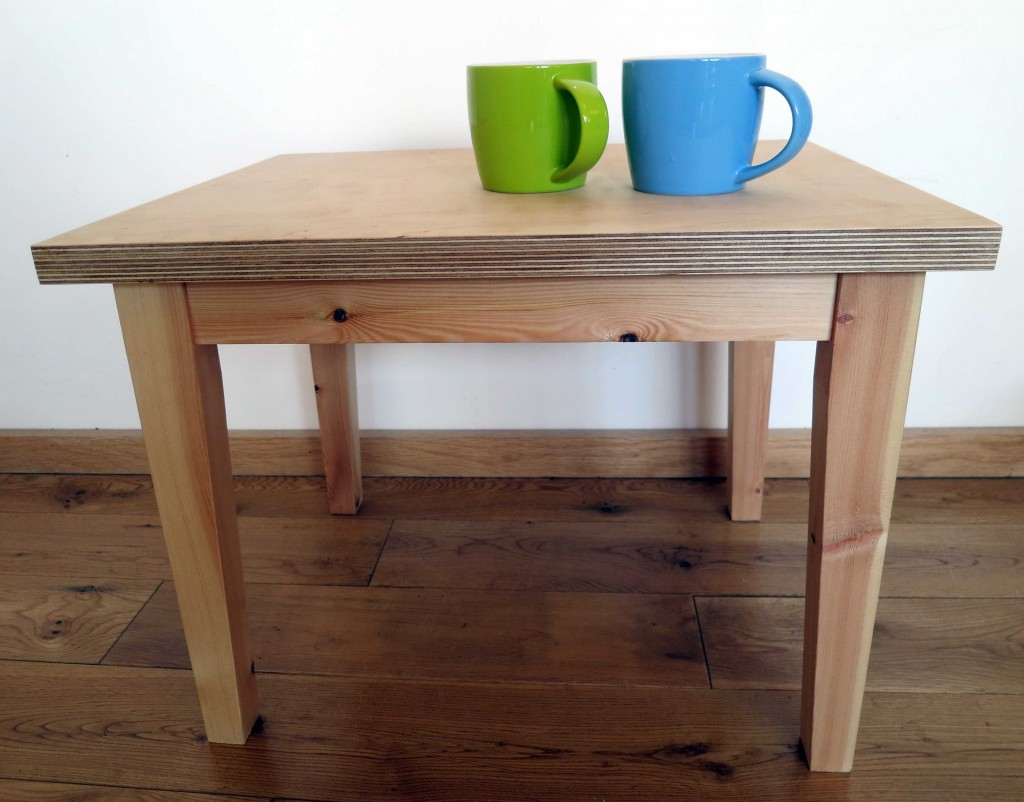
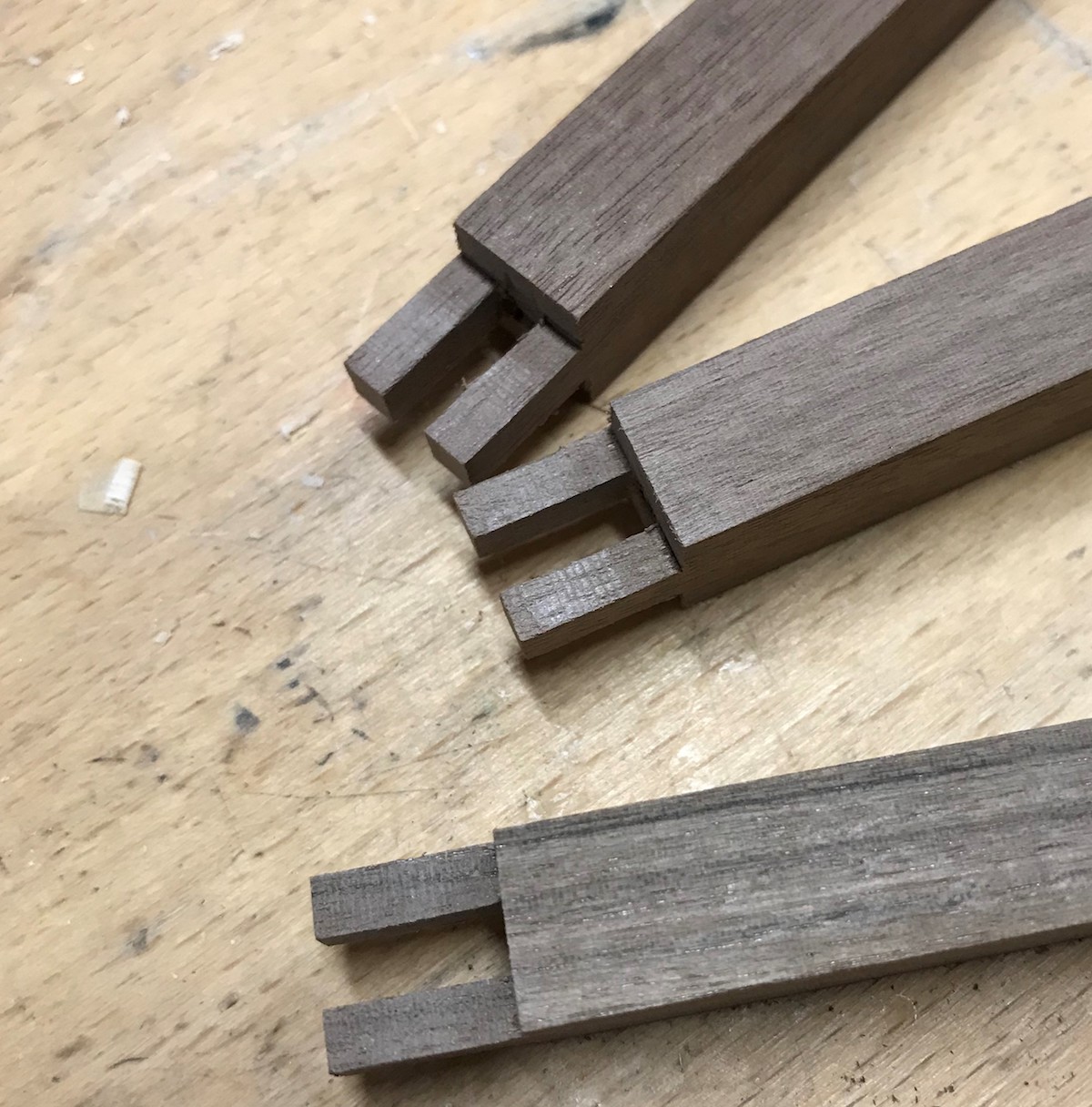

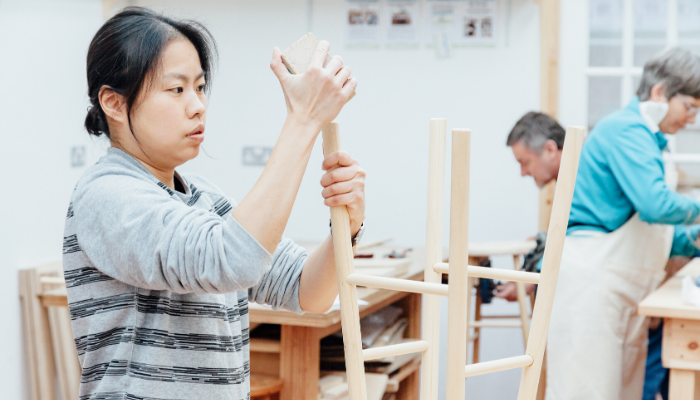
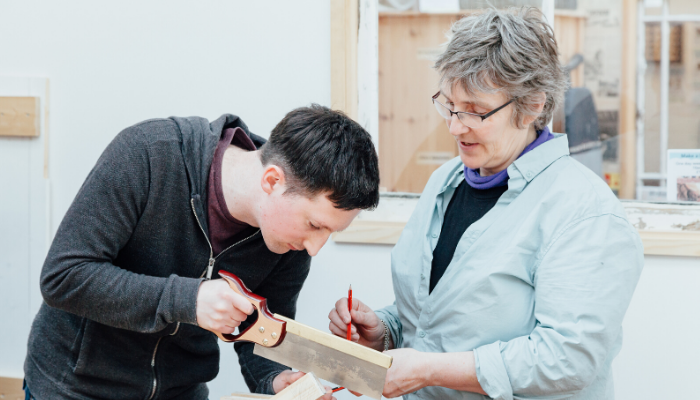

What you are being taught in all our workshops is how to achieve what you set out to do – whether it’s accurately measuring and marking a line to make a half lap joint, a dovetail or a box, table or shelf.
Learning to saw straight will help you make a wood stool or a frame of joints. It will also be essential if you have a bigger project in mind.
Gaining control of a chisel will enable you to refine the shape of your wood to fashion rebates, tenons, hinges and slots.
A smoothing plane flattens your work and can be a great upper body workout.
To help you to a good beginning, we hone the chisel and plane edges to a surgeon’s sharpness as we want you to experience how much easier ( and safer) it is to work with sharp tools. In our longer courses, we include instruction on how to keep your chisels and plane working at their best. Any chef will know the value of keeping knives sharp.
There are several ways to chop an onion and similarly, it’s common to know several ways to reduce a plank of wood into smaller pieces. It isn’t possible to cover all the techniques in our one and two day courses, but by learning ancient hand skills, you will have a good foundation to use other tools safely and effectively.
We make our short courses as varied and comprehensive as we can. They are all very practical and will all allow you to find out if you enjoy the discipline of patience when practicing woodwork.
The more you practise, the more you develop body memory and the easier it will be to saw, chisel and plane.
Like cooking, you may just be happy to put together a casual meal at home or you may want to learn more so you can host a spectacular dinner party for twenty.
Pick a project that matches your timetable and budget – and make sure it’s something you would like to make. Give your learning as much time as you can, and enjoy the process.
The longer the course – the more practice you will get and your skill and understanding will increase.
Often a solution to your individual project will develop while you are making the project on any course. Our tutors are all enthusiasts with lots of experience and love to help work out a way to get a job done.

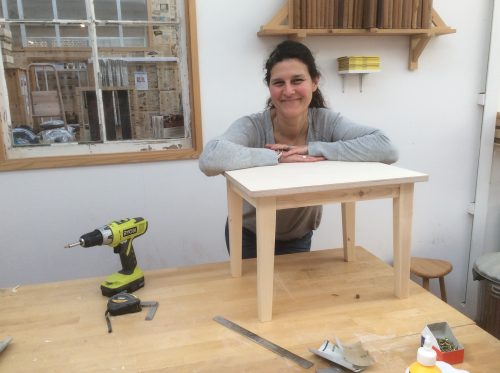
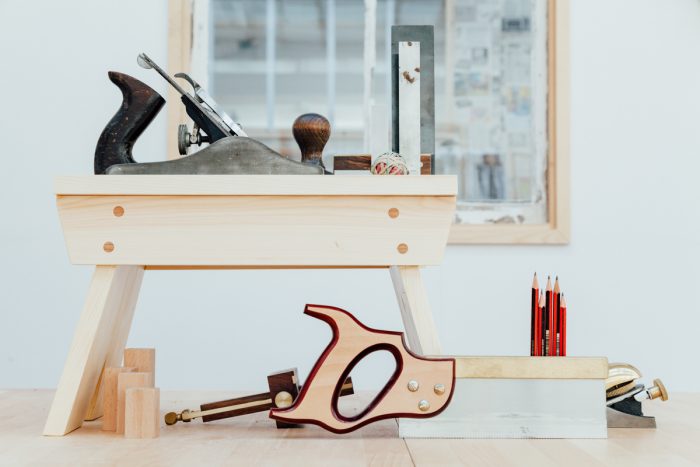


Our aim is to help you develop techniques that you can carry on using at home.
Most of us are used to having a good set of kitchen tools and we already understand the rewards of using good quality utensils. Even though you could get by with one bowl, one spoon and a milk pan, it will limit your range of cooking skills.
The same goes in the workshop. Poor tools can make woodwork a frustrating chore so we guide you towards obtaining a minimal collection of good quality implements of your own.
All of our courses lean towards learning to make things using hand tools. We do use cordless drills, but we focus on hand saws, hand planes and chisels. When it might be unneighbourly to use a router or a circular saw, lots can be achieved by clamping work to a fixed surface.
All woodwork skills build on each other and there is no such thing as too much learning. We are still passionate about hand skills here and that gives us all great satisfaction and is a pure pleasure to pass on to others. That’s our recipe for success.
You can view our full range of woodwork courses here.